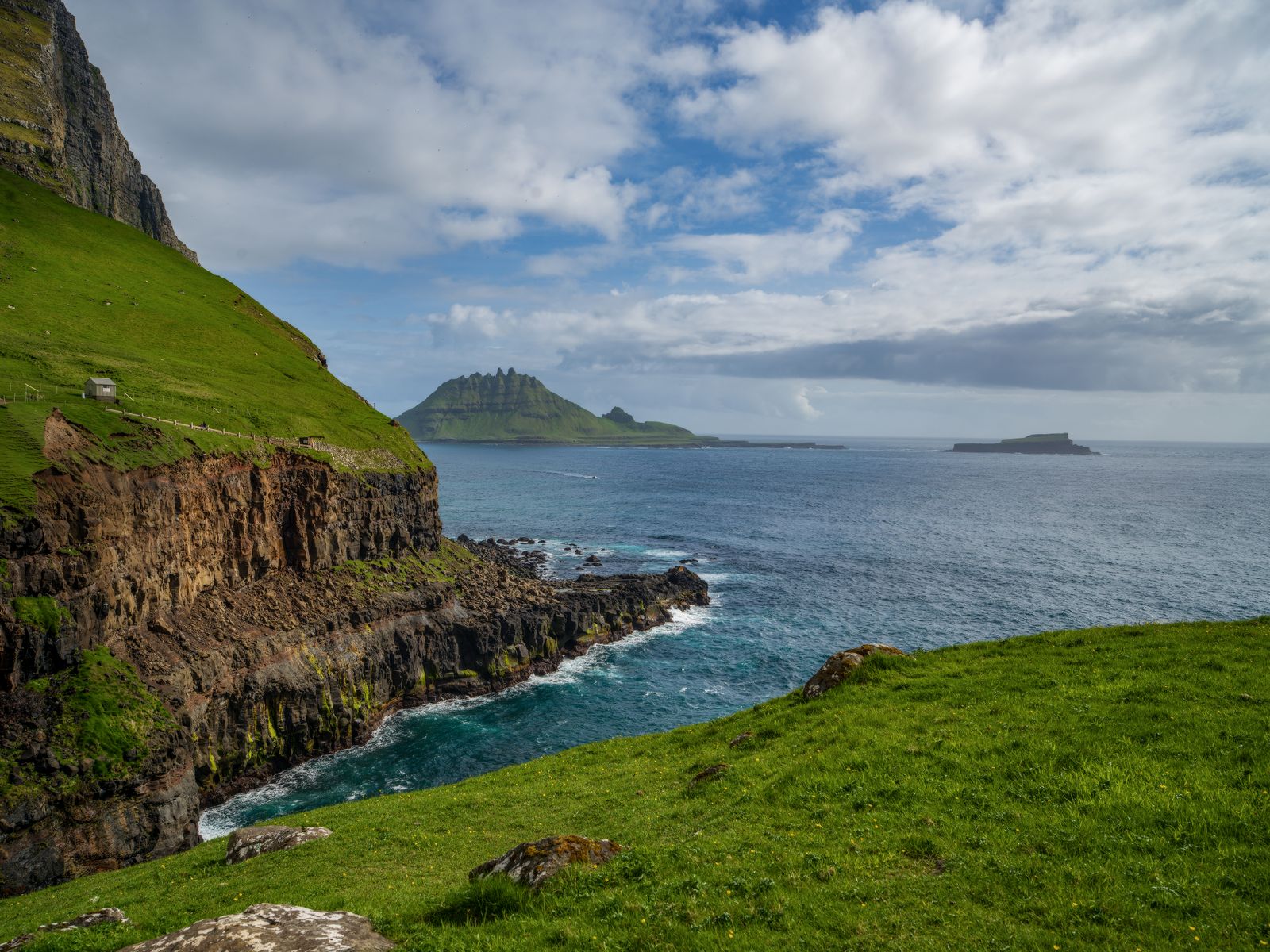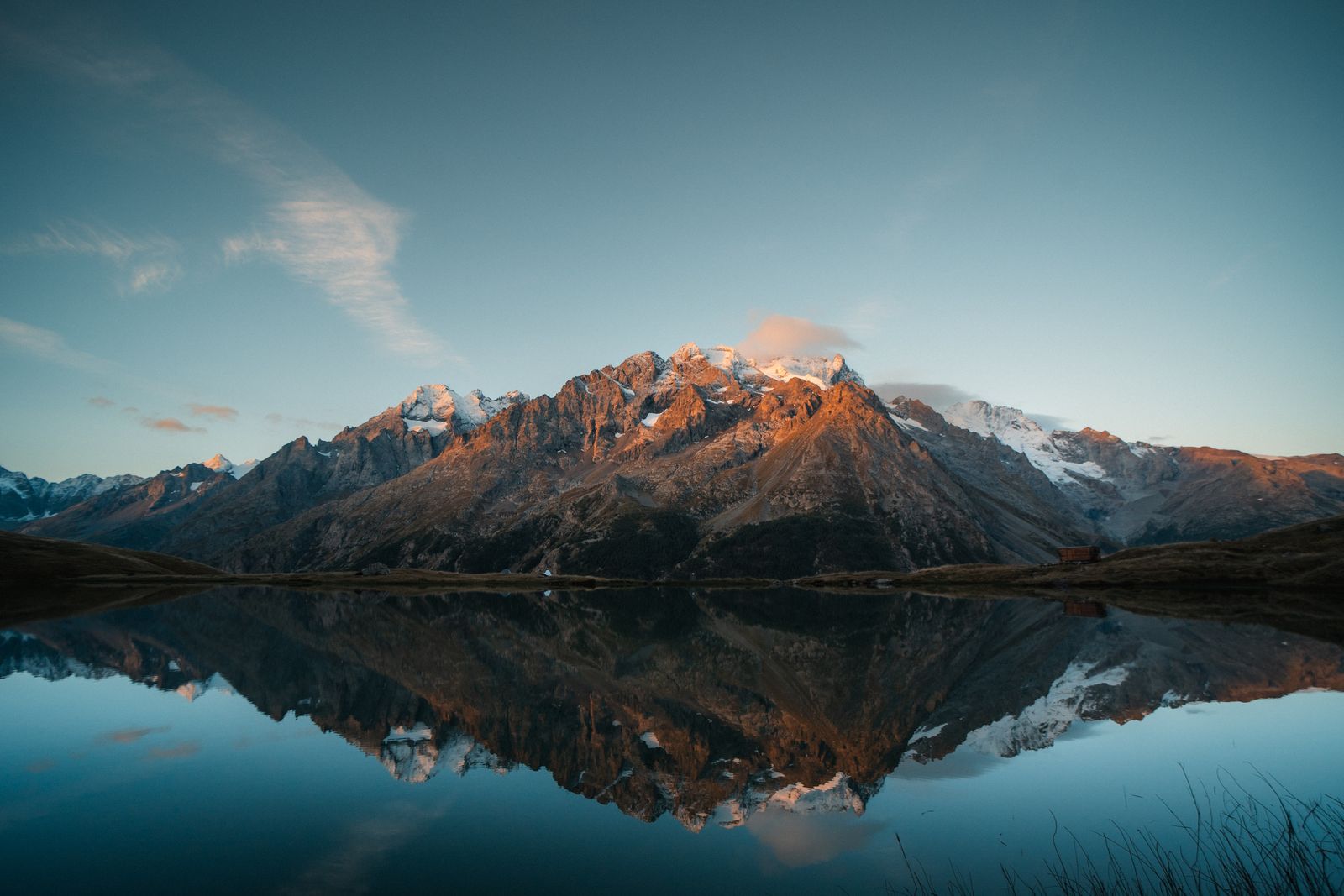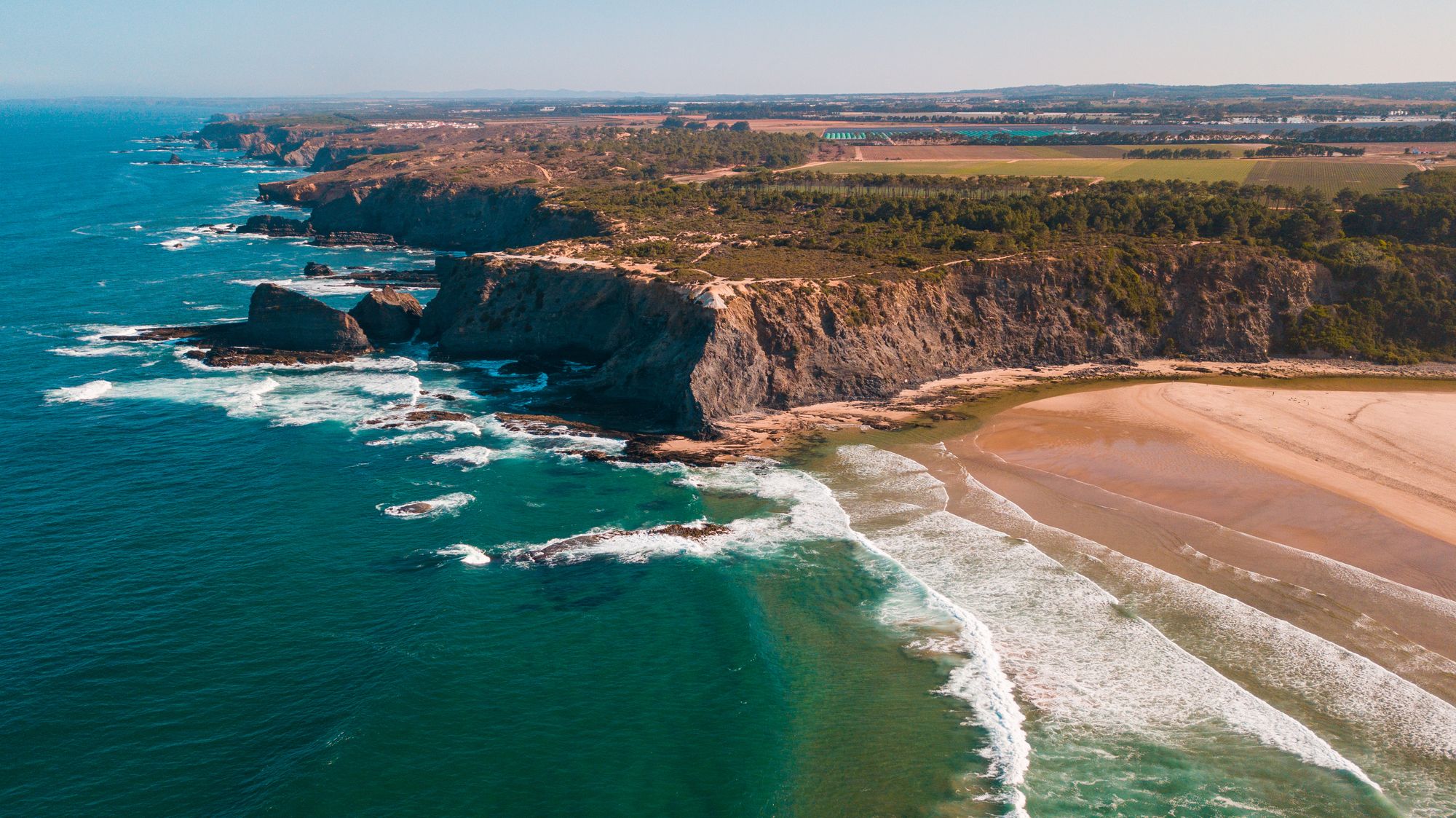
A coastline is a meeting place. Dark rock, pale sand and moving water sit together in a narrow strip of the world. Seen from above, the shore becomes a drawing: the fine edge of a wave, the curve of a bay, the deep green of a headland.
A line that never stays still
The beach in this photograph looks almost empty. That space is part of its appeal. Without a crowded foreground, the eye can follow the water all the way around the bend and out toward the open sea. The land feels substantial; the white surf feels temporary.
There are two rhythms worth noticing at a shore. Individual waves arrive one after another, while the tide moves on a longer cycle. NOAA describes tides as long-period waves driven by the forces of the Moon and Sun. The same stretch of sand can look very different as the water rises or falls.
Sometimes the most generous part of a landscape is the space it leaves open.
Look at the edges
In a landscape photograph, the small transitions often carry as much interest as the broad view. Here, the dark line between sand and vegetation traces the shape of the beach. Farther out, the water shifts from pale green to a deeper blue. The picture has no single boundary; it is made of many.
Try following just one of those lines. Start with the nearest curl of foam and let it lead you along the shore. Then look back at the headland. The scene has not changed, but the route through it has.
An editorial reflection on landscape photography. Images are credited to their creators; these essays are not firsthand travel reports.
Further reading: NOAA · What are tides? ↗