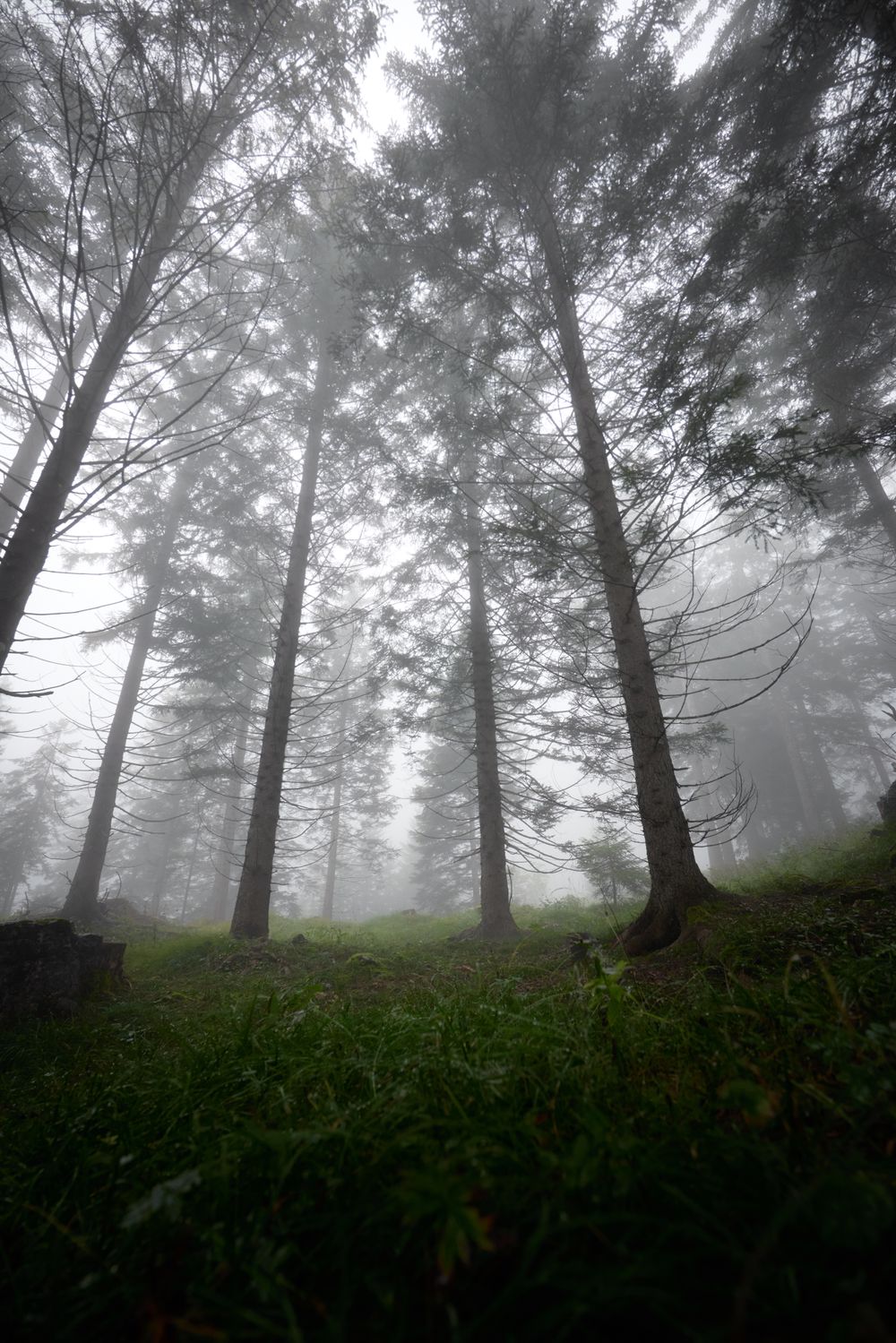
Mist changes the way a forest is read. The closest trees remain dark and distinct; those behind them fade into a pale, almost blank distance. Instead of one wall of green, the photograph becomes a sequence of layers.
Distance, made visible
Follow the tree shapes from the front of the image toward the back. Their outlines become less precise and their tones move closer to the colour of the mist. You can feel depth without being able to see where the forest ends.
A photograph cannot deliver the air of a woodland or the sound under its canopy. It can, however, hold onto a particular arrangement of light. Here, that light is gentle enough to make the space between the trees as noticeable as the trees themselves.
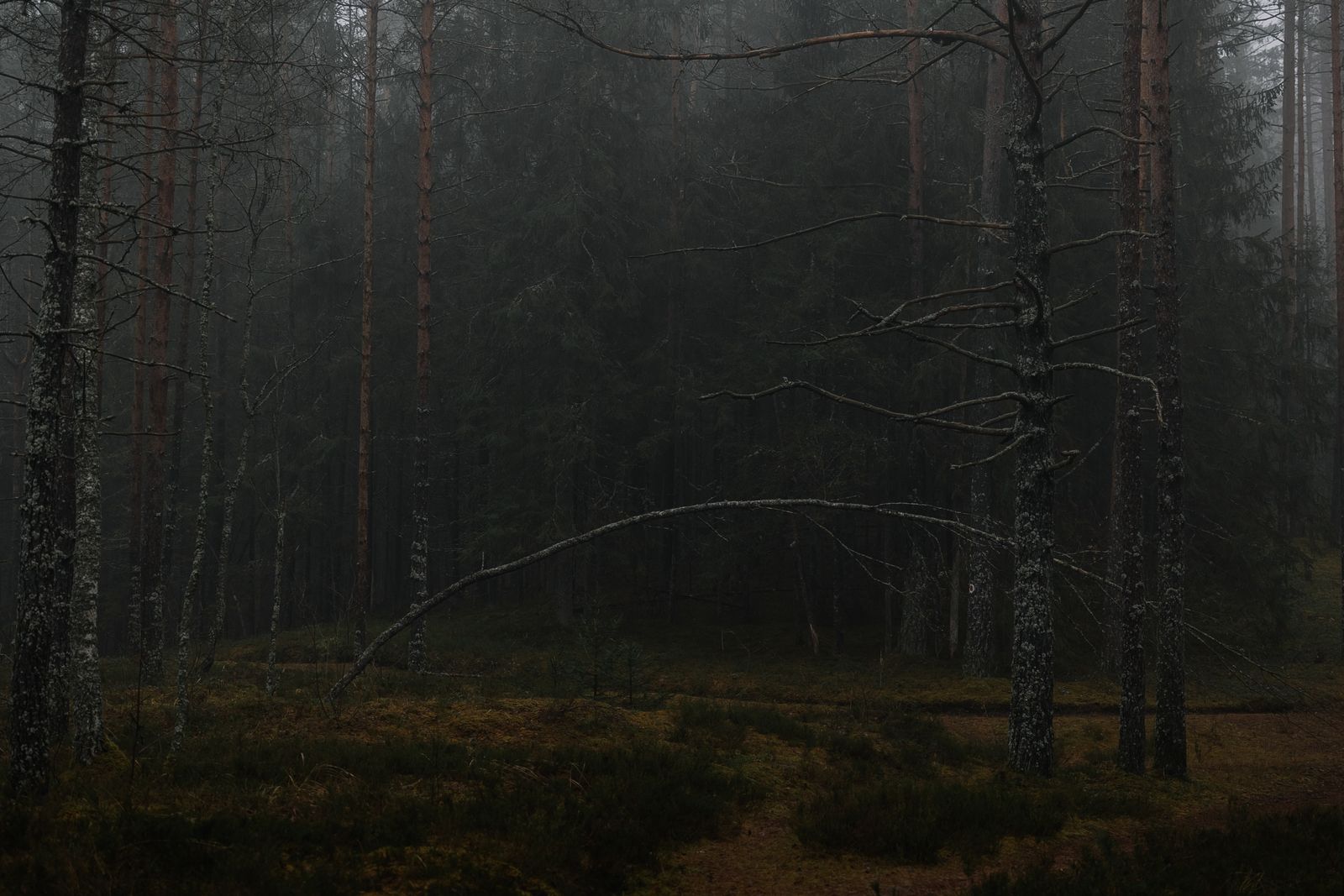
Look between the trees. There is a whole landscape in the spaces.
A forest is more than its canopy
The National Park Service's description of Olympic's temperate rain forests is a useful reminder to look beyond the tallest trees. It describes mosses growing on branches, seedlings taking root on decaying logs and fallen wood supporting other life. That account concerns Olympic specifically; this photograph is an illustration of a wooded landscape, not a record from that park.
The invitation is simple: when looking at any forest scene, pay attention to what sits between the obvious subjects. A patch of ground, a gap between trunks or the edge of a shadow can become an entry point into the picture.
The broad view gives a first impression. The smaller spaces are what make it worth returning to.
An editorial reflection on landscape photography. Images are credited to their creators; these essays are not firsthand travel reports.
Further reading: National Park Service · Temperate rain forests ↗